


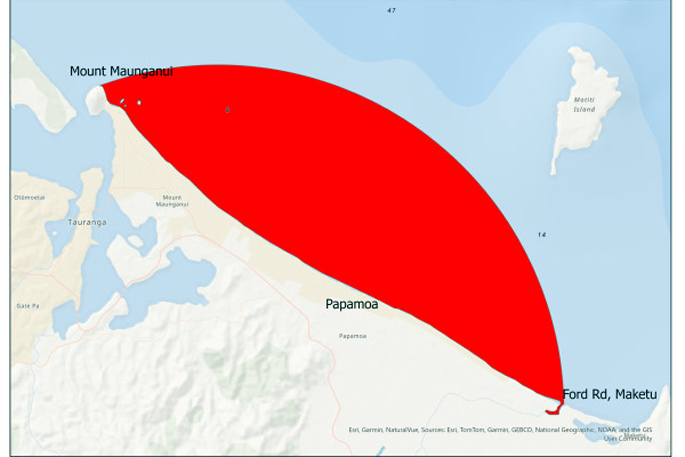
A public health warning urging people not to gather or consume shellfish along the Bay of Plenty coastline has been updated this week to a smaller area.
The warning is now in place from Mount Maunganui to Ford Rd west of Maketū, a Ministry for Primary Industries spokesperson confirmed to SunLive on Wednesday.
Last Friday the warning captured from just north of the Maketū Beach estuary to the northern end of Waihī Beach, but by Monday afternoon it had been narrowed.
The warning came after routine testing detected dangerous toxin levels – and New Zealand Food Safety (NZFS) urged people not to gather or consume shellfish in the area outlined.
Deputy director-general Vincent Arbuckle said pipi samples taken from the area showed paralytic shellfish toxin levels above the safe limit.
“Please do not gather and eat shellfish from this area because anyone doing so could get sick,” he said.
The warning covers shellfish species that include mussels, oysters, tuatua, pipi, toheroa, cockles, scallops, pūpū (cat’s eyes) and Cook’s turban. Cooking does not remove the toxin.
Arbuckle said NZFS was monitoring a naturally occurring algal bloom that is spreading through the region. Because shellfish filter-feed, the toxin produced by the algae accumulates in their gut and flesh.
“Generally, the more algae there are in the water, the more toxic the shellfish get,” he said.
Symptoms of paralytic shellfish poisoning can appear within 10 minutes to three hours of consumption.
They include numbness or tingling around the mouth and extremities, difficulty swallowing or breathing, dizziness, headache, nausea, vomiting, diarrhoea, paralysis and respiratory failure. In severe cases, the illness can be fatal.
While most shellfish should be avoided, pāua, crab and crayfish remain safe to eat only if the gut is completely removed before cooking because toxins concentrate in the gut.
Finfish are not affected, but NZFS advised gutting fish and discarding the liver before cooking.
Anyone who becomes unwell after eating shellfish from the affected area should call Healthline on 0800 611 116 or seek immediate medical attention.
People are also encouraged to contact their local public health unit and keep any leftover shellfish for testing.
NZFS said it would continue monitoring shellfish toxin levels and update the public as the situation changed. No other alerts are in place.
Commercially harvested shellfish – sold in shops and supermarkets or exported – was subject to strict water and flesh monitoring programmes by NZFS to ensure they are safe to eat. To keep up to date with shellfish biotoxin alerts, go to: www.mpi.govt.nz/fishing-aquaculture/recreational-fishing/where-unsafe-to-collect-shellfish

0 comments
Leave a Comment
You must be logged in to make a comment.