


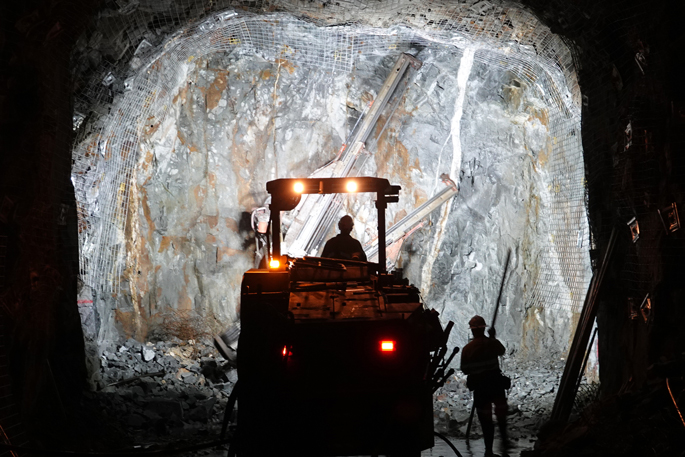
The Government has approved OceanaGold’s Waihī North mining project, extending gold and silver extraction in the Waihī area until 2043. The decision is the first major mining consent granted under the Government’s new Fast‑track Approvals Act.
Infrastructure Minister Chris Bishop announced the approval today, calling the project a “nationally significant investment” expected to deliver major economic benefits for the Waikato region and the country.
“Projects of this scale and complexity require numerous consents, permits and authorisations across a range of decision‑makers,” Bishop said. “The one‑stop shop of the fast‑track process brings all these approvals together.”
The expert panel took 112 working days to assess the proposal.
 Wharekirauponga will extend mining at Waihī to around 2040.
Resources Minister Shane Jones said the same project would have taken “longer than five years” to approve under the previous system. He estimated Waihī North would generate $5.2 billion in additional gold and silver exports over its 18‑year lifespan — averaging $286 million per year.
“That annual figure is equivalent to 64% of New Zealand’s wool exports and 14% of wine exports,” Jones said.
According to Bishop, Crown revenue from corporate tax, PAYE and royalties is expected to total a net present value of $422m over the life of the project.
Major expansion of Waihī operations
OceanaGold lodged its application in April this year seeking permission for a staged expansion of its existing Waihī operations.
The package of approvals covers environmental, wildlife, heritage and access requirements for new open-pit and underground mines, as well as new tailings and rock storage facilities.
The decision extends the company’s current mining consent, previously due to expire in 2030.
 OceanaGold president and chief executive Gerard Bond says Waihī North is the company's largest investment.
OceanaGold welcomed today’s approval. President and chief executive Gerard Bond said Waihī North was the company’s largest investment, with around $1b budgeted for development.
“This project will deliver high‑paying jobs and contribute to economic growth for New Zealand,” Bond said.
“It will generate substantial taxes and royalties, support communities and boost exports, whilst also making a net positive contribution to the environment.”
Alison Paul, the company’s senior vice-president for legal and public affairs in New Zealand, said the Wharekirauponga underground mine – about 10km north of the current Waihī operation – would generate more than $8b in export revenue at current prices.
Paul said about 80% of project expenditure would occur within New Zealand, including more than 30% within the Hauraki District.
She said the fast‑track process delivered efficiency without compromising scrutiny. “Speed does not equate to a lower standard of outcome,” she said, noting the panel reviewed the project against 26 different acts and regulatory instruments and considered more than 60 submissions.
Environmental groups condemn approval
Environmental advocates sharply criticised the decision.
Coromandel Watchdog of Hauraki chairwoman Catherine Delahunty described the approval as a “crime against the environment and our communities”, saying the expansion would produce more toxic waste and harm biodiversity. She highlighted concerns about the proposed Wharekirauponga underground mine beneath conservation land.
Delahunty said blasting, vibration and dewatering posed “unacceptable risks” to sensitive habitats and rare species. She also questioned the reliability of environmental modelling, saying the company’s assumptions were “based on weak data”.
She criticised the fast‑track process for limiting public and iwi participation and said the panel had given “little weight” to local concerns.
Scientist Marie Doole of Mātaki Environmental said consent conditions relied on “a blizzard of management plans” that would be difficult to monitor.
Delahunty also raised concerns about long‑term tailings safety, risks to the Hauraki Gulf, and fire hazards linked to underground dewatering.
Protest planned
Coromandel Watchdog of Hauraki has called a “rally of resistance” for Saturday, December 20, at the entrance to the Wharekirauponga forest, signalling the group’s intention to continue opposing mining expansion across the region.

0 comments
Leave a Comment
You must be logged in to make a comment.