


Many people have never come across the term aphasia – and if they have their most likely point of reference is actor Bruce Willis, who was diagnosed with the speech disorder in 2022.
But in New Zealand alone it affects around 30,000 people – more than the number of people who have Parkinson’s and muscular dystrophy combined.
Aphasia, which literally means “absence of speech”, is the loss of the ability to speak or understand spoken or written language, because of disease or injury to the language area of the brain.
Aphasia NZ founder Kate Milford describes it as being a bit like a library after an earthquake.
“All the books are still in the library, but they’re not on the shelves and they’re not where you want them,” she says.
“So, you go to find what you want to say, and it won’t come out.”
Aphasia affects different people in different ways.
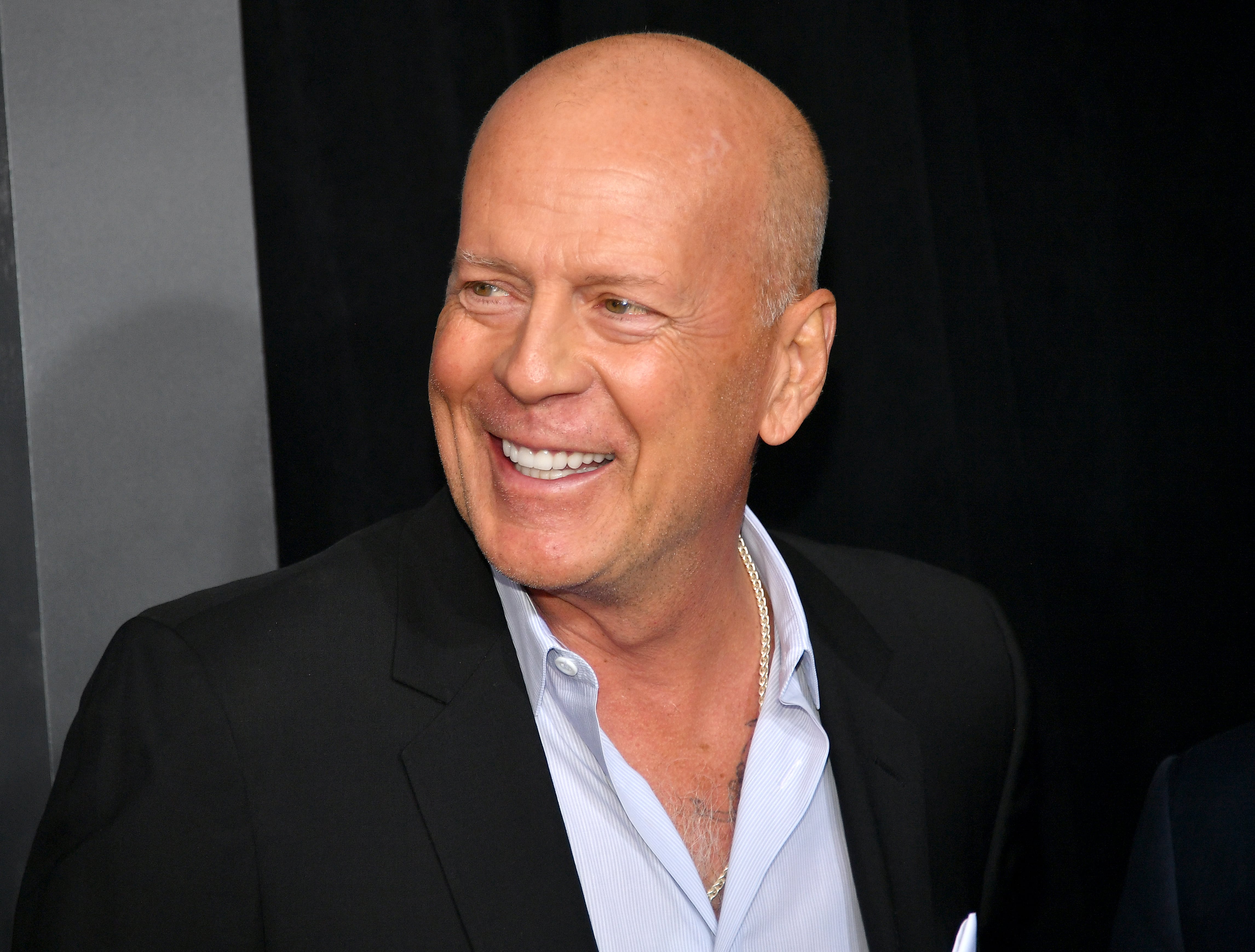
Bruce Willis. Photo / Getty Images
She says sometimes people with aphasia will also only be able to give some of the words in a sentence, leaving the listener trying to fill in the gaps.
“It might be in your head completely correctly and nothing will come out of your mouth,” she says.
“Or you go to say, “this is my wife”, and you say, “this is my mother”, so the words get muddled.”
Debbie’s story
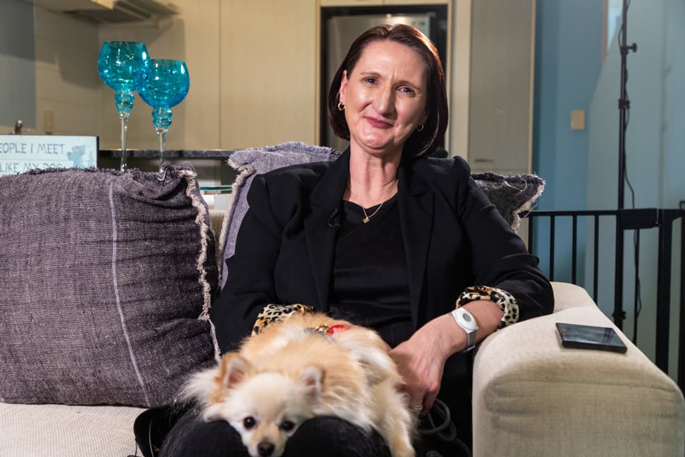
Debbie Malloch developed aphasia in 2020 after a spinal fluid leak, which led to a brain clot that resulted in a rare form of stroke.
A second brain clot and stroke in 2021 made her aphasia worse, she says.
Malloch says one of the biggest challenges she faces is situations where she wants to be independent but needs help because of her condition.
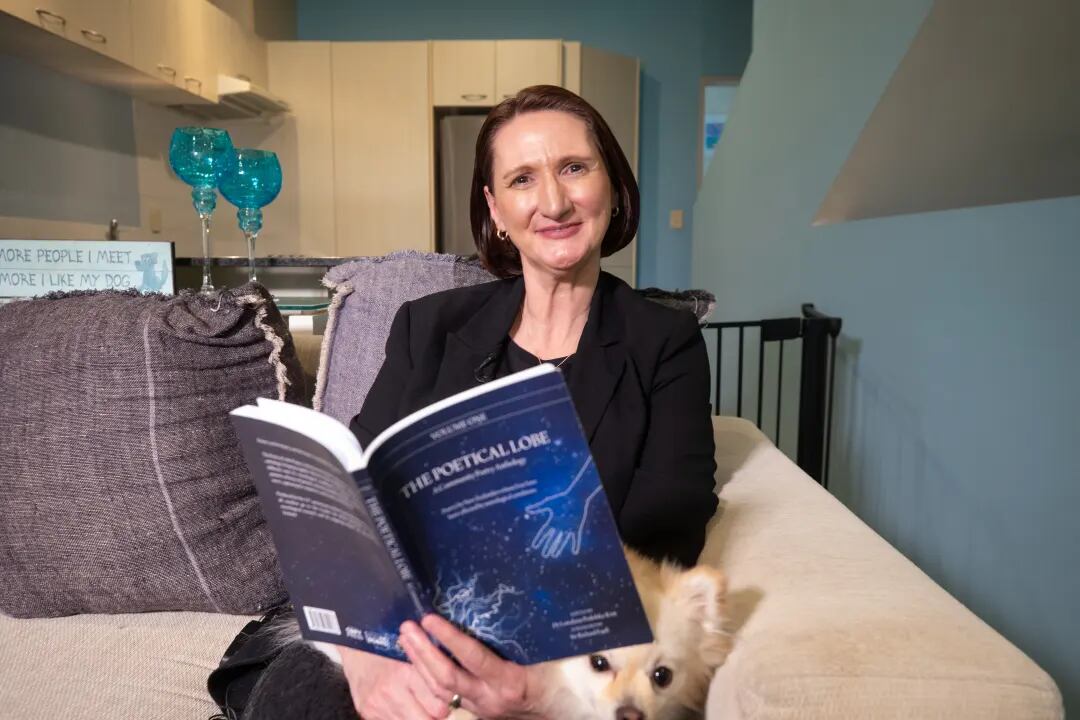
Debbie Malloch. Photo / Nick Monro, RNZ
She says when going to the shops people can have difficulty understanding what she’s saying.
“They think me dumb,” she says.
When she’s in a stressful situation, her speech gets worse.
She has a support dog, Barcardi, who helps her to refocus when she is stressed.
“When Barcardi senses something’s not right [...] he won’t look nowhere else but me,” she says.
“He calms my language down, make easier talk, and then I refocus and able speak.”

Debbie Malloch's dog Bacardi. Photo / Nick Monro, RNZ
Malloch says aphasia is incredibly draining, with constant battles trying to find the right word.
She says it also affects the quality of the conversations she can have.
“I’ve lost deep conversations, it’s surface conversations.”
Malloch has started publishing poetry about aphasia, and in 2025 won Aphasia NZ’s Emma Castle Award for Excellence in Aphasia for her work.
But while writing poetry is a challenge for someone with impaired communication, it’s one Malloch accepts with relish.
She’s also embraced AI as a tool to help her write.
“When I write a poem, I lose little words,” she says.
“So I type into phone thoughts and what want expressed. Then me go AI [...] and AI puts little words in.”
Fiona’s story
Fiona Glover also had a stroke in 2020 that left her with severe aphasia.
She lives with her husband, two teenage daughters, and two dogs.
Before her stroke, she was a manager of a government department but afterwards she was left unable to work.
Glover says while life has “never been the same” since, one thing that hasn’t changed is the circle of friends and family supporting her.
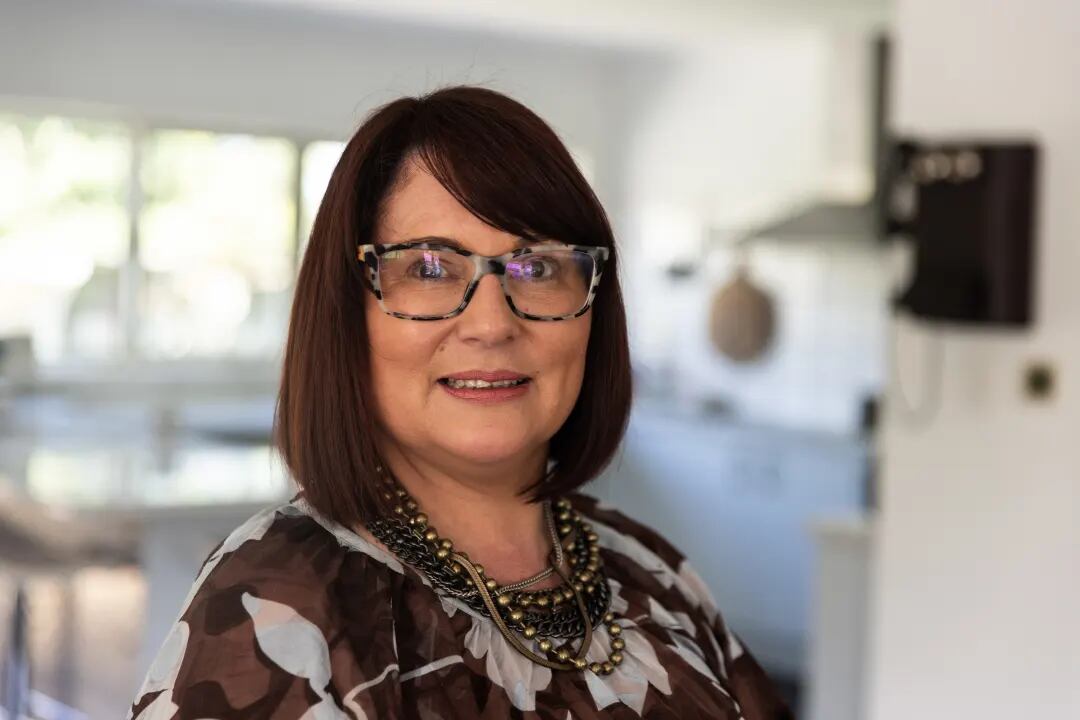
Fiona Glover. Photo / Samuel Rillstone, RNZ
She says she relies on her husband’s help with some things but also likes to be as independent as possible.
With quite severe aphasia, Glover sometimes uses apps on her phone or a whiteboard to help her communicate what she wants to say.
She says she doesn’t want her stroke to mean she’s stuck at home and wants to get back into some form of work.
But finding work has been a challenge.
She’s dipped her toes back in the workforce waters recently working one day a week as a volunteer at Dress for Success, and she hopes to continue to find more opportunities.
Ray’s story
Ray Ropata developed aphasia in 2021.
He says initially he only knew two words, but he’s worked hard to get his words back.
Ropata also worked in a government department and was able to go back to work part-time after a period of recovery.
He’s recently taken redundancy and started his own business, launching an apparel line based on the whakatauāki (proverb) “Kaua e Mate Wheke, Me Mate Ururoa” – Don’t die like an Octopus, die like a Hammerhead shark.
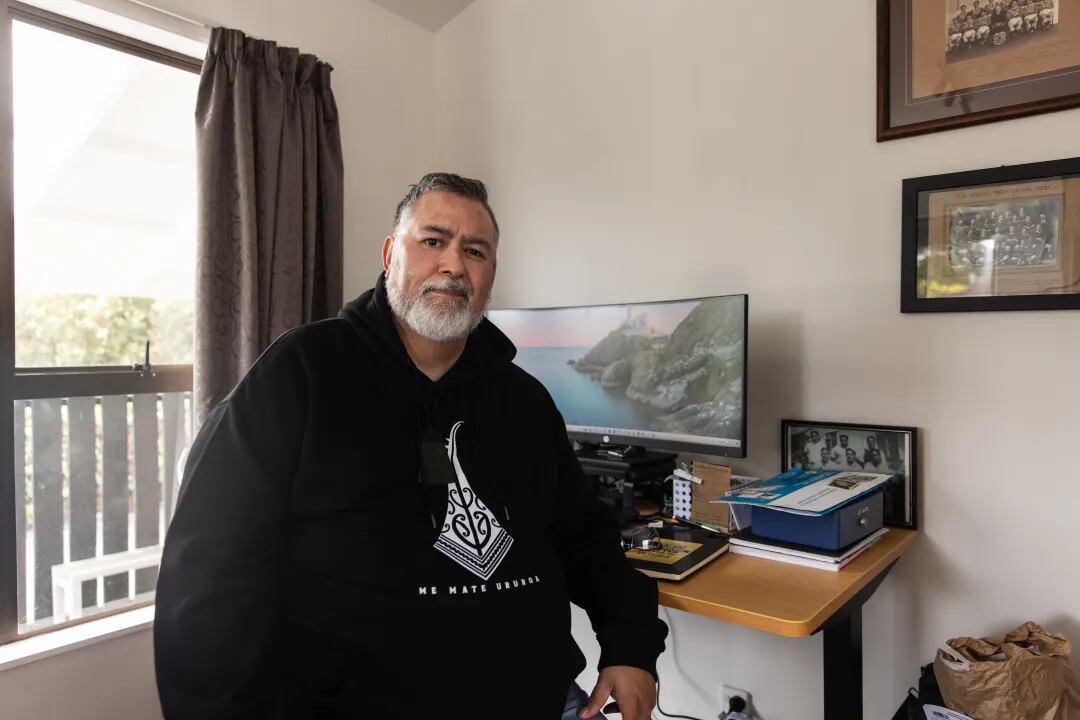
Ray Ropata. Photo / Samuel Rillstone, RNZ
Ropata says it keeps his brain active.
“I’ll either do the business or sit at home and watch TV, play PlayStation. I’m not about that. I’m about keeping myself vibrant and alive.
Ropata says he used to speak te reo better than English, but aphasia completely wiped it out.
“It was pretty hard for me accepting that. But I can understand my brothers, my sisters.”
He’s slowly relearning how to speak it, too.
“I used to speak on the marae, and then I’ll just get up and just hit the kaupapa.”
But nowadays, he says “I think I can do it, but I’m just a bit nervous”.
Before his stroke, Ropata also sang and played the bass in a band. He no longer sings, but says he has stayed in the band and now describes himself as Kāpiti Coast’s one-handed bass player.
Challenges in the health system
Malloch is critical about the amount of support people with aphasia get.
“When you’re in hospital system, you get so much therapy, which is usually six weeks to 12 weeks, then you’re in community on own.”
She says often people have to turn to groups like Aphasia NZ. The charity provides support groups where they can meet other people with aphasia and work on rebuilding their language skills. But the group isn’t funded.
“If I’m sitting in front of the minister, I would like him or her to follow me a day. I’ll show them how you go community, how you get treated community, and then see if they like that, right? Because it’s the hardest thing when losing communication.”
Milford says there is more demand for speech language therapy than there is supply.
But she says groups like theirs also have an important function.
“For other people, the most important thing is to have people around you that you can talk to.”
She says if she could change one thing in the health system, it would be for all health professionals, not just speech language therapists, to have a better understanding of aphasia and to have better strategies for supporting conversation.
Health NZ says it provides speech language therapy to people with aphasia in acute hospital settings, rehabilitation wards, and following discharge into the community.
“Health NZ recognises the critical importance of communication to living a full and rich life. For people with aphasia, access to the right support can enable them to connect with whānau, participate in work, and manage everyday tasks such as completing forms and sending texts and emails,” says Jacqui Lunday, national chief Allied Health Scientific and Technical.
“Ongoing care in our outpatient and community settings is prioritised based on need and risk, as is the case with most community-based services provided by Health NZ. We acknowledge that the level of support available to patients after hospital discharge varies across districts. Where possible, we offer tailored rehabilitation and recovery support in the community, in outpatient clinics and/or group sessions.
“Many districts have community or outpatient [speech language therapy] services available that provide therapy and support for several weeks or months following discharge from hospital.”
Lunday says when people transition out of their community services, therapists make every effort to connect them with local support services provided by NGO partners like Aphasia NZ, university student clinics, or digital rehabilitation tools to make this transition as smooth as possible.
“As with many other health professions, there is a high international demand for speech-language therapists. As at the beginning of September 2025, Health NZ had 20 speech and language therapy vacancies across the motu.”
Be patient and listen
Ropata has just one word of advice when it comes to how people should interact with someone with aphasia.
“Listen,” he says.
Malloch’s advice, meanwhile, is to be patient. “I’m not lost intelligence, I’m still me. Just give me time to speak.
“I know you’re frustrated [but] I’m frustrated too.”
Glover also encourages people to be patient and give people some time.
- RNZ

0 comments
Leave a Comment
You must be logged in to make a comment.